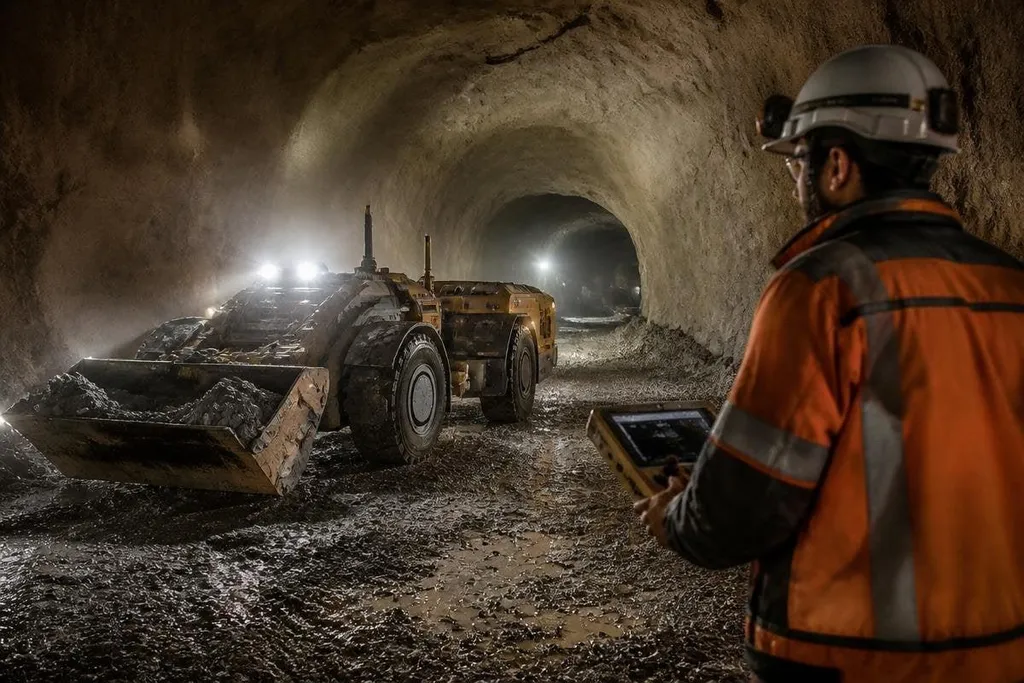
A mining robot has to work around dust, water, rock, poor radio links, and people sharing the same space. The next stage of the industry will depend on whether these machines can finish useful jobs for a full shift, then recover from faults without putting a worker in danger.
- Remote control will come before broad autonomy
- Payload, battery runtime, and recovery time matter more than a smooth demo
- Each mine will need proof from its own site
The first work will stay remote
Mining robots are likely to start with jobs where a person faces the greatest risk. A remote operator can guide a machine through a tunnel, inspect a damaged area, or move material while staying outside the work zone.
That setup still needs clear proof. The operator needs a live view, reliable control, and enough radio range to keep the machine useful. If the signal drops behind rock, the robot must stop safely or return to a known point without guessing.
Autonomy can grow from there. A robot that can hold a route, avoid a wall, or return to its charging point takes less attention from the operator. It still needs a person to handle blocked paths, loose ground, and objects its sensors cannot read well.
The useful numbers are on the job sheet
Mining companies won't buy a robot because it can move on its own. They need to know what it carries, how long it runs, how often it stops, and how much time a technician needs to restore it.
The useful specification list is short:
- Payload: the weight the robot can carry on the mine's slopes and surfaces
- Battery runtime: working hours under load, not an empty vehicle on flat ground
- Radio range: the distance and rock conditions that still support control
- IP rating: protection from dust and water around the robot's motors and electronics
- Recovery time: minutes needed to clear a fault and return the robot to work
A machine with a large payload may still fail the job if its battery runs down before the next haul point. A smaller robot may fit narrow passages but need more trips, which changes the labour plan and the cost per tonne.
Site data will decide what works
No single robot design fits every mine. A surface operation can offer wider routes and clearer radio paths, while an underground site may bring sharp turns, wet ground, low ceilings, and long stretches without a direct signal.
That makes the first survey as important as the machine choice. Teams need route maps, floor conditions, traffic rules, charging locations, and a plan for removing a disabled robot. These details turn a product claim into a work plan.
A mining robot's test record should name the mine, task, machine, operator, and date, because a route that works in a yard may fail underground. Robot24.com can place those details beside claims about autonomy and remote control, giving the next section a firm basis for testing what a demo leaves out.
The missing piece in many future claims is site evidence. A video can show motion, but it can't answer how the machine handles a wet ramp after hours of work or how quickly a crew can reach it after a fault.
Broad autonomy underground still has hard limits. Sensors can lose useful views in dust or darkness. Maps can change when rock is removed. A route that worked during one shift may be blocked during the next.
Safety adds another test. The robot needs a clear stop state, visible warning signals, and rules for people who enter its operating area.
Those controls must work when the network fails, the battery runs low, or a wheel loses contact with the ground.
I'd skip any mining robot pitch that gives a smooth autonomy demo but leaves recovery time and fault handling unanswered.
A buying check for mine operators
Use this list before a trial moves from a meeting room to a work site:
- Ask for loaded runtime on the same slopes and ground found at your mine.
- Record the radio range at the deepest and most blocked points on the route.
- Set a payload target tied to one real task, such as moving a tool kit or ore bin.
- Time a fault recovery with the crew and equipment available at the site.
- Check the stop system with a lost signal, low battery, and blocked route.
- Define the result that ends the trial, such as completed trips per shift.
The future of mining robots will take shape through these measured trials. The open question is whether the first machines can complete enough work between faults to justify the people, charging gear, and safety controls around them.